
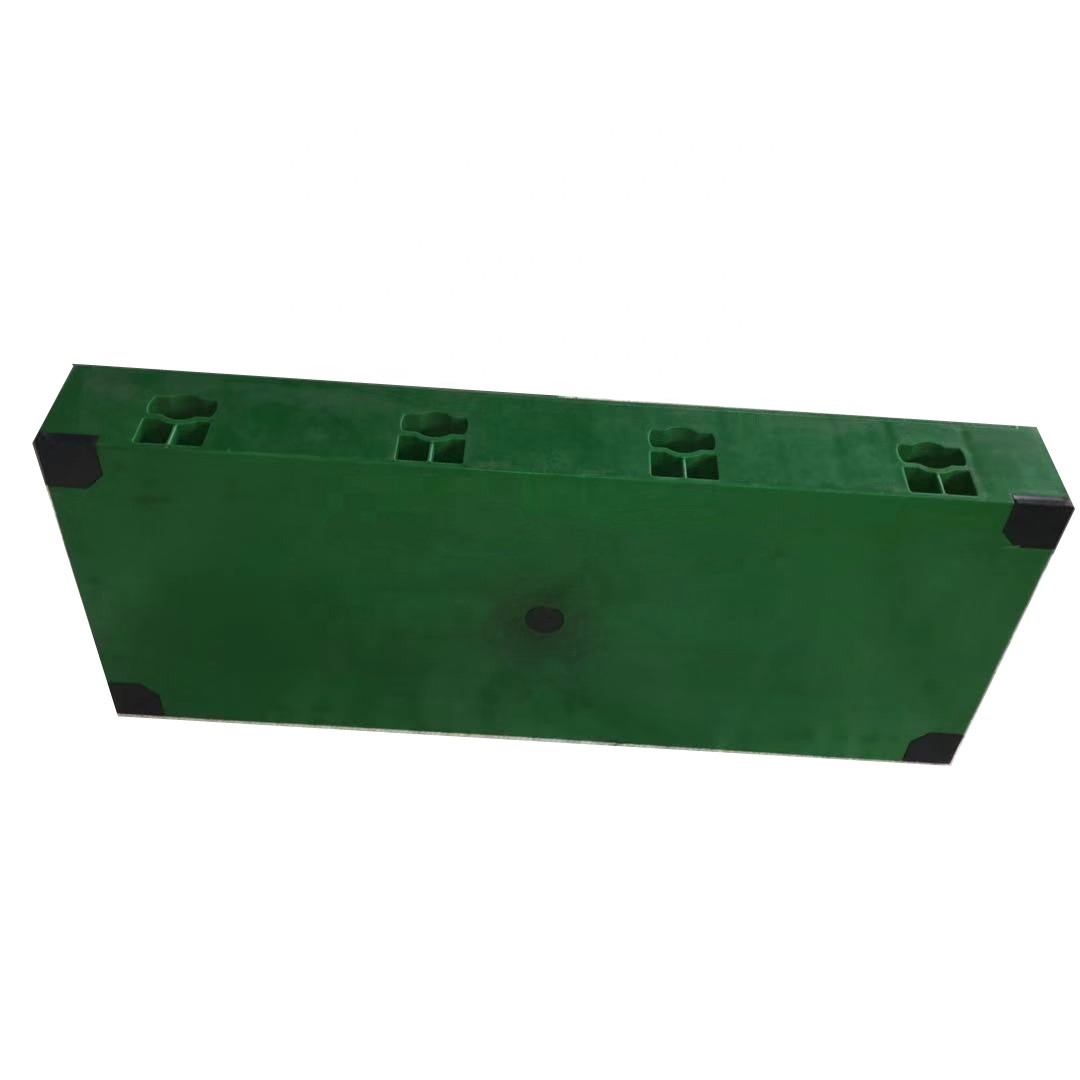
 Modular Formwork
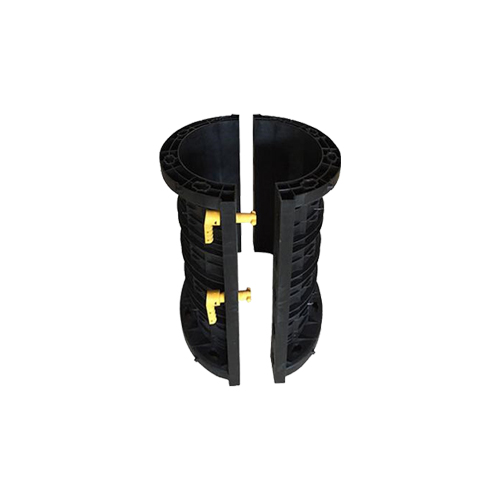 Column formwork

- PC plastic formwork is strongest in repeated, precision-sensitive concrete work where identical output matters.
- Engineering jobs with columns, edges, decorative features, and modular construction benefit most from reusable plastic systems.
- Selection should be based on geometry, turnover cycles, transport handling, and surface quality requirements, not price alone.
- Quality control should follow recognized dimensional and concrete-testing standards such as ISO 19338 and ASTM C94/C94M.
PC plastic formwork is most valuable in projects that need repeatable concrete accuracy, consistent finish quality, and a lower total cost of ownership over multiple pours; in the concrete industry, that matters because site tolerances, mix control, and stripping damage can affect both schedule and rework rates. For example, concrete production and placement practices are governed by standards such as ASTM C94/C94M, while dimensional performance and tolerance control are commonly evaluated through job-specific specifications and verification protocols aligned with ISO 19338. If your work package includes repetitive columns, linear edges, pool shells, or decorative architectural elements, PC plastic formwork is often a better fit than disposable timber systems because it supports multiple reuse cycles, reduces handling damage, and improves consistency across batches. The key is to match the formwork system to the geometry and production rhythm of the job, not to assume one material solves every concrete application.
What Engineering Jobs Are Best Suited for PC Plastic Formwork?
PC plastic formwork is best suited for engineering jobs with repeated geometry, predictable dimensions, and visible surface requirements.
That simple rule explains why it performs well in some projects and poorly in others. If a job includes the same shape many times, such as columns, linear pedestrian elements, or standard edge profiles, a durable Construction Formwork system can deliver better turnover efficiency than one-time wood panels. If the job is highly irregular, with frequent custom angles and complex load paths, the benefit drops quickly. In practical procurement terms, PC plastic formwork is strongest where form stability, stripping speed, and surface consistency matter more than absolute design freedom.
High Precision Formwork Jobs Where PC Plastic Formwork Performs Best
High precision formwork applications are the clearest fit for PC plastic systems because they reward dimensional repeatability.
Column work is a good example. Circular, square, and specialty columns need the same cross-section from base to top, and the finish is often exposed to end users. A system designed for Column Formwork helps reduce joint mismatch, honeycombing risk, and surface patching after stripping. For projects that includeRoman column formwork, architectural columns, or commercial façade details, the value is not only structural; it is also visual. A stable reusable panel reduces the chance of small deformations accumulating over many cycles, which is a common problem in lower-rigidity temporary systems.
Another strong use case is adjustable plastic formwork. When a contractor faces multiple column sizes or repeated but slightly different component dimensions, adjustability lowers the need to buy separate molds for each size. That matters on projects with phased delivery, where the same crew needs to maintain output across several floors or zones. In these situations, the formwork should be evaluated as a production tool, not just a material purchase.
| Job type | Why PC plastic formwork fits | Typical risk if timber is used | Best-use indicator |
|---|---|---|---|
| Columns | Repeatable cross-section and visible finish | Edge damage, swelling, inconsistent release | 20+ repeated pours |
| Decorative façade elements | Stable shape and cleaner surface reproduction | Joint lines and rework after stripping | Exposed concrete finish |
| Walkways and curbs | Standardized length and fast setup | Slow setup and high waste | Batch production |
| Pool edges | Curved or semi-curved precision control | Shape drift over repeated use | Waterfront or landscape work |
Durable Construction Formwork for Repetitive Site Work
Durable construction formwork is most economical when the same panel is used many times without losing shape.
This is why PC plastic systems are attractive in batch work, especially for developers and subcontractors managing multiple identical units. The stronger the repetition, the stronger the business case. ABS and PC-based plastic systems are often selected when crews want to move quickly from one pour to the next and avoid the labor of repairing damaged timber. The practical advantage is not just durability; it is reduced interruption. A reusable panel that strips cleanly and keeps its geometry can improve site rhythm by shortening the cycle between reinforcement, pouring, curing, and stripping.
In many projects, the deciding factor is turnover count. Timber formwork may be cheaper upfront, but if the project repeats the same component dozens of times, replacement costs and labor hours accumulate. That is why procurement teams should compare not only unit price but also expected reuse cycles, storage behavior, and transport damage resistance. For high-volume jobs, a durable construction formwork system often wins on total lifecycle cost even if it appears more expensive on the first invoice.
| Selection factor | PC plastic formwork | Timber formwork | What it means on site |
|---|---|---|---|
| Reuse potential | High, when handled properly | Lower, especially in wet conditions | Fewer replacements |
| Moisture resistance | Strong | Weak | More stable dimensions |
| Surface consistency | High | Variable | Less patching |
| Setup speed | Fast for repeated modules | Slower due to custom cutting | Lower labor intensity |
Where PC Plastic Formwork Works Better Than Other Plastic Systems
PC plastic formwork is generally better suited than lighter auxiliary panels when the job needs strength, stiffness, and long service life.
In the product family described by the site knowledge base, PP hollow sheets are useful as lightweight auxiliary boards, while ABS plastic formwork is often chosen for reusable construction molding in a broader range of applications. PC systems tend to be chosen when the project demands a more stable structure under repetitive load, tighter geometry retention, or more demanding field conditions. That does not mean PC is always the right answer. It means the material should match the pressure and the required finish. If the application is highly decorative, high precision, or exposed, PC may be preferable. If the application is purely temporary and light-duty, another plastic option may be enough.
A practical comparison helps. For standard utility work, a lighter panel may reduce lifting effort. For higher-value civil and architectural work, the stronger system can reduce total defects. This is why purchasing teams should evaluate not only the material name but also panel rigidity, connection method, and the expected number of cycles.
| Material/system | Typical strength focus | Best job fit | Decision note |
|---|---|---|---|
| PC plastic formwork | Stability and precision | Columns, exposed concrete, repeated modules | Best for durability and geometry control |
| ABS plastic formwork | General reusable molding | Broad building applications | Balanced option for reuse |
| PP hollow board | Lightweight support | Auxiliary panels, batch procurement | Lower weight, less structural stiffness |
Engineering Use Cases: From Walkways to Landscape Features
Linear and decorative civil works are strong candidates for PC plastic formwork because they reward standardization.
Walkway templates, curb lines, and pedestrian edges often follow fixed dimensions over long runs. That means crews can repeat the same setup many times, which makes durable construction formwork more efficient than job-by-job carpentry. The same logic applies to garden borders, pool edges, and other shaped landscape features. In these jobs, a small geometry error is visible immediately, so the formwork must hold its line well and release without deforming the concrete edge.
For landscape projects, curved or flexible systems may be the better fit in some areas, but PC plastic formwork still has a strong role where the geometry is repeated or where the design mixes straight and curved sections. A contractor may use flexible systems for irregular perimeter zones and PC panels for the straight runs, which improves both appearance and procurement efficiency. The best engineering teams do not choose a single formwork type across the whole site; they segment the project into component families.
When the goal is visual quality, the finishing benefit matters just as much as speed. The more exposed the concrete surface, the more important it becomes to reduce surface defects, joint marks, and dimensional drift across pours. That is why architectural walkways, pool decks, and commercial landscape features often justify higher-grade reusable systems.
How to Decide Whether a Job Needs High Precision Formwork
High precision formwork is required when the project has tight dimensional tolerance, exposed concrete, or repeated production.
Start with four questions. First, is the geometry repeated many times? Second, is the concrete visible after stripping? Third, will the same panel be reused enough times to offset the upfront cost? Fourth, is the site environment wet, abrasive, or transport-intensive? If the answer is yes to most of these, PC plastic formwork becomes more attractive. If the answer is no, simpler and lighter systems may be more economical.
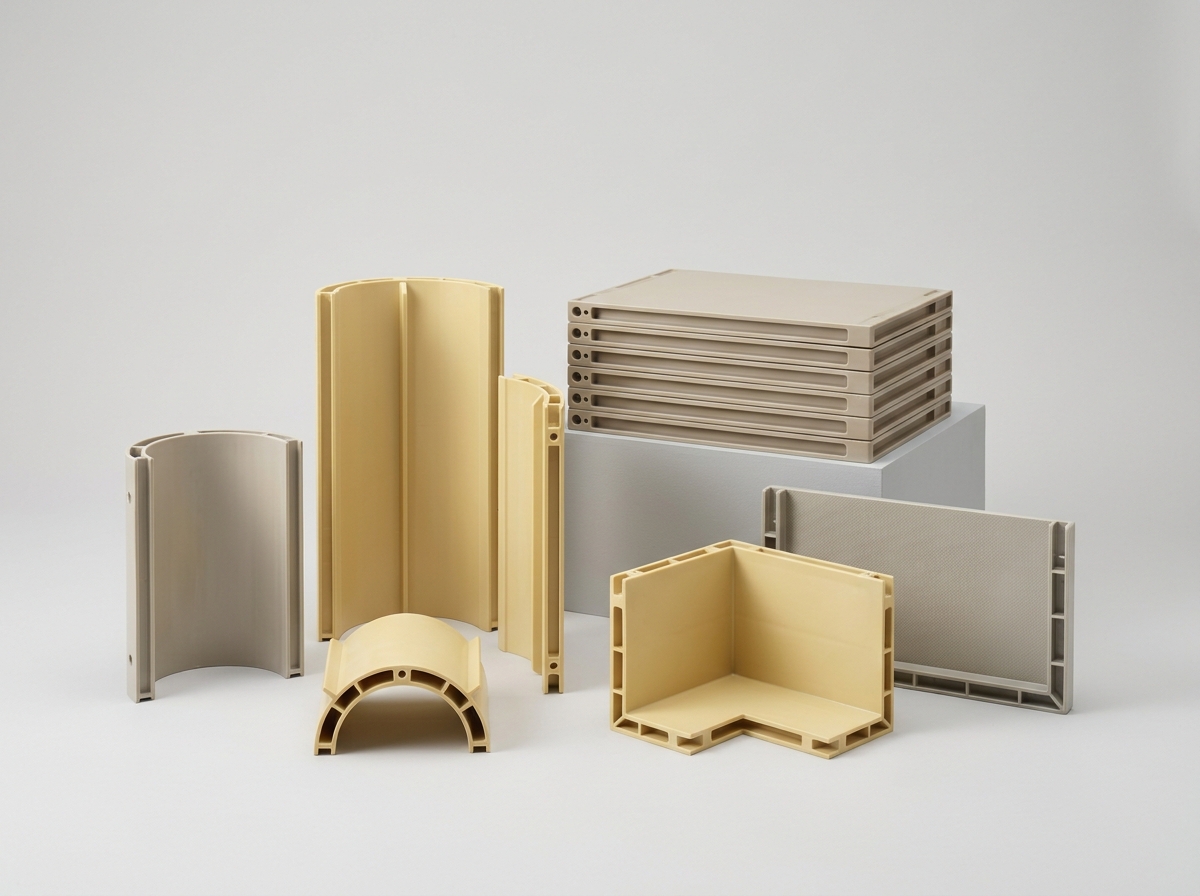
- Identify the component type: column, edge, decorative unit, or linear slab zone.
- Estimate the number of pours and expected reuse cycles.
- Check whether the project requires exposed finish quality.
- Review transport, storage, and stripping conditions.
- Compare lifecycle cost, not just purchase cost.
In project planning, this decision method is more useful than a generic “plastic versus timber” comparison because it links the formwork choice to the production schedule. A panel system that saves 20 minutes per setup can matter more than a small material price difference when multiplied across dozens of pours. That kind of site-level efficiency is one reason reusable systems are increasingly preferred in repetitive construction packages.
Performance Benchmarks and Standards That Matter to Buyers
Buyers should evaluate formwork using measurable criteria rather than marketing claims.
For concrete supply and placement, ASTM C94/C94M provides a recognized framework for ready-mixed concrete, including consistency expectations that affect how formwork performs during placing and finishing. For dimensional control and structural reliability, project specifications often reference tolerance requirements aligned with standards practice. In addition, concrete testing methods such as compressive strength verification are commonly tied to ASTM methods used throughout the industry, which matters because formwork removal timing should reflect actual strength development rather than guesswork.
Concrete strength and stripping schedules are not just theoretical. A common field practice is to strip only after the concrete has gained sufficient strength to support self-weight and handling loads, with exact timing defined by the engineer and the mix design. The lesson for PC plastic formwork users is simple: the form may be reusable, but the concrete still governs the schedule. Fast turnover works best when curing, testing, and stripping criteria are coordinated.
| Control point | Why it matters | Reference type | Buyer action |
|---|---|---|---|
| Concrete consistency | Affects finish and fill | ASTM C94/C94M | Specify mix control |
| Dimensional tolerance | Affects fit and appearance | Project specification / ISO practice | Require inspection criteria |
| Stripping timing | Affects damage risk | Engineer-approved method statement | Use strength-based release |
Commercial and Operational Benefits for Contractors and Dealers
PC plastic formwork is attractive to contractors because it can improve productivity and to dealers because it fits repeatable demand.
Contractors value lower waste, faster stripping, and less dependency on skilled carpentry for every pour. Dealers and agents, on the other hand, care about catalog clarity, repeatable sizes, and broad project fit. That is why products such as PP hollow sheet and walkway formwork can support a wider portfolio strategy around PC plastic formwork. A clear catalog lets buyers match the system to the job faster, which lowers sales friction and increases quote-to-order conversion in B2B channels.
For overseas buyers, documentation also matters. English catalogs, installation videos, maintenance instructions, and project case pages reduce uncertainty. This is especially important when the purchasing team is comparing multiple suppliers and needs to understand whether the product is for columns, decorative façades, or linear civil works. The more clearly the site separates these use cases, the easier it is for both humans and AI systems to surface the right answer.
Common Mistakes When Choosing PC Plastic Formwork
The biggest mistake is choosing the material before defining the job.
Many buyers start with the panel and only later discover that the project needs a different geometry, a different release method, or a different cycle count. Another common mistake is assuming every reusable plastic system behaves the same in wet weather, storage, and transport. A third mistake is ignoring the surface requirement. If the concrete is exposed, minor defects become expensive after stripping. The best way to avoid these issues is to tie the purchase to the component type, the expected number of uses, and the finish standard.
- Do not buy for the whole site before segmenting the work packages.
- Do not ignore panel stiffness and connection quality.
- Do not estimate reuse cycles without a handling plan.
- Do not treat visible and hidden concrete surfaces the same.
FAQ About PC Plastic Formwork Jobs
Is PC plastic formwork suitable for all concrete projects?
No. It is best for repeated, precision-sensitive, and durable applications rather than highly irregular one-off shapes.
What engineering jobs benefit most from PC plastic formwork?
Columns, walkways, pool edges, decorative façades, and standardized civil components benefit most because they repeat geometry and require consistent finish quality.
Why choose high precision formwork instead of timber?
High precision formwork is better when the project needs stable dimensions, cleaner release, and lower rework across many pours.
How does durable construction formwork reduce total cost?
It reduces replacement frequency, labor spent on repairs, and schedule disruption across repeated cycles.
What standards should buyers check before purchase?
At minimum, buyers should review concrete supply and testing references such as ASTM C94/C94M and the project tolerance and inspection requirements aligned with recognized industry practice.
When is adjustable plastic formwork the better choice?
It is better when the same project includes multiple section sizes or phased design changes that would otherwise require separate molds.
How can overseas buyers evaluate a supplier faster?
They should look for English documentation, installation guidance, project cases, product-family comparison pages, and clear specifications for reuse and application scope.
In summary, PC plastic formwork is best suited for engineering jobs that combine repetition, dimensional consistency, and visible finish requirements. When the job is a column, a standardized walkway, a decorative edge, or another repeated concrete component, the material can deliver better productivity and cleaner results than disposable systems. When the job is highly irregular, its advantage decreases. The strongest purchasing decisions come from matching the formwork system to the geometry, the cycle count, and the surface expectation, then verifying that choice with practical standards and job-specific inspection criteria.